
August 31, 2026
No Comments
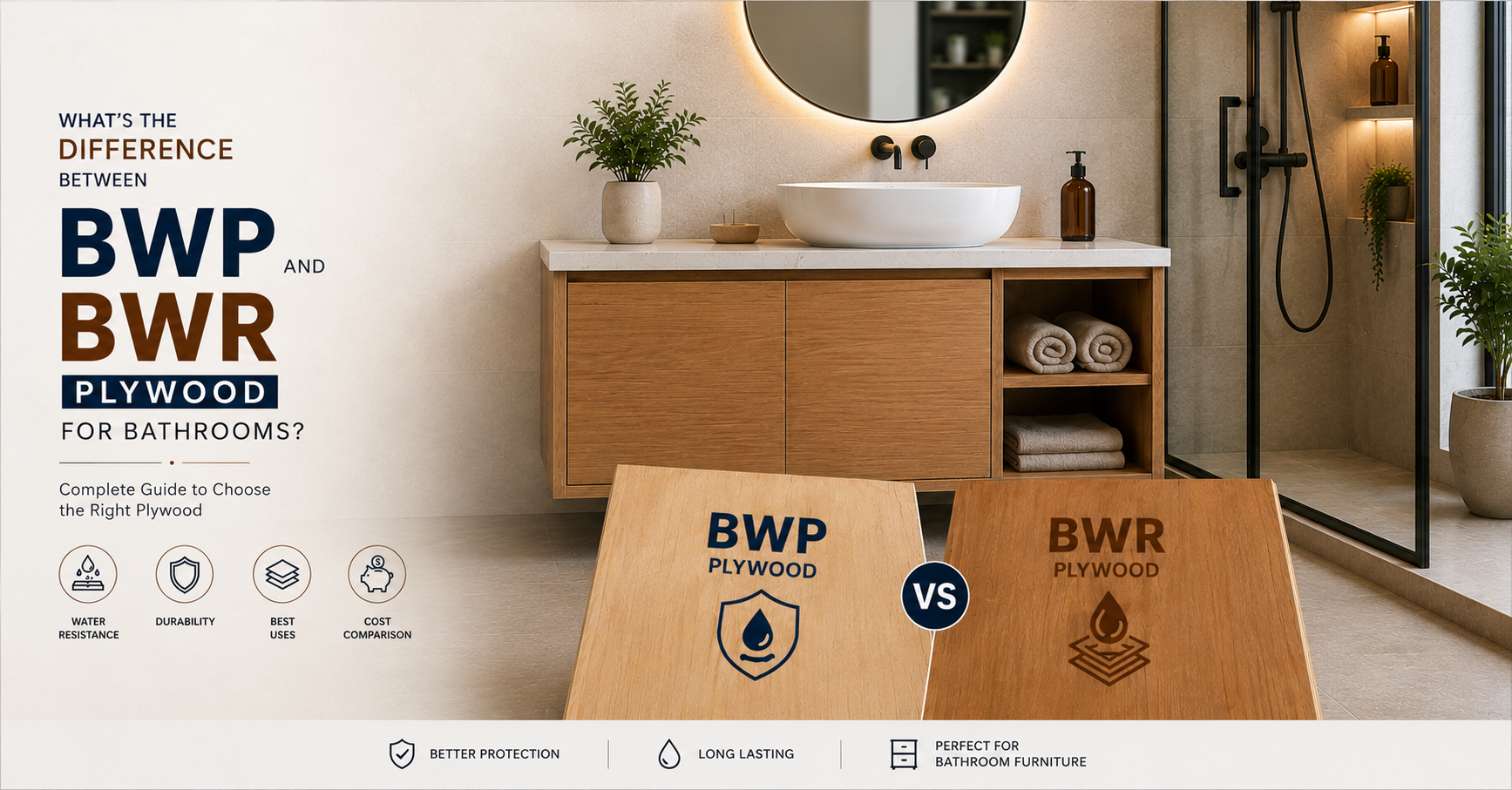
What’s the Difference Between BWP and BWR Plywood for Bathrooms?
When choosing plywood for bathroom furniture, moisture resistance is one of the most important factors to consider. Bathrooms are exposed to humidity, steam, water splashes and changing temperatures, which can affect the performance and durability of furniture materials.
BWP and BWR plywood are two commonly considered options for moisture-prone areas. But what is the difference between them, and which one is better for bathrooms?
In this guide, we’ll compare BWP vs BWR plywood and help you understand which option is better suited to your bathroom furniture and interior requirements.
Table of Contents
- BWP vs BWR Plywood: Comparative Summary
- What is BWP Plywood?
- Advantages of BWP Plywood
- Best Uses of BWP Plywood
- What is BWR Plywood?
- Advantages of BWR Plywood
- Best Uses of BWR Plywood
- Major Differences Between BWP and BWR Plywood
- Which Plywood is Better for Bathrooms?
- Tips for Using Plywood in Bathrooms
- Conclusion
- Frequently Asked Questions
BWP vs BWR Plywood: Comparative Summary
Before looking at each plywood grade in detail, here’s a quick comparison:
| Feature | BWP Plywood | BWR Plywood |
|---|---|---|
| Full Form | Boiling Water Proof | Boiling Water Resistant |
| Water Resistance | Higher | Good |
| Moisture Exposure | High | Moderate |
| Bathroom Use | Highly Suitable | Suitable for limited exposure |
| Durability | Excellent | Good |
| Applications | Bathrooms, kitchens, wet areas | Furniture, kitchens, interiors |
| Cost | Generally higher | Generally more economical |
The biggest difference is their level of resistance to water and moisture. BWP is generally preferred for areas exposed to higher moisture, while BWR can be suitable where exposure is more moderate.
What is BWP Plywood?
BWP stands for Boiling Water Proof plywood.
BWP plywood is manufactured for applications where higher resistance to moisture and water is required. It is commonly selected for areas where furniture may experience frequent humidity or water exposure.
For bathroom interiors, BWP plywood can be used for:
- Bathroom vanities
- Under-sink cabinets
- Storage cabinets
- Bathroom shelves
- Utility furniture
- Other moisture-prone applications
Its combination of strength and water resistance makes it a popular choice for demanding interior applications.
Advantages of BWP Plywood
- Higher resistance to water and moisture
- Excellent durability
- Strong and stable construction
- Suitable for humid environments
- Good long-term performance
- Suitable for laminates, veneers and other finishes
Best Uses of BWP Plywood
BWP plywood is commonly used for:
- Bathroom furniture
- Modular kitchens
- Sink cabinets
- Utility areas
- High-moisture interiors
- Doors and other demanding applications
What is BWR Plywood?
BWR stands for Boiling Water Resistant plywood.
BWR plywood is designed to provide good resistance to moisture and water compared with standard moisture-resistant plywood. It can be a practical choice for furniture and interior applications where moisture exposure is present but not extremely high.
BWR plywood can be used for:
- Kitchen cabinets
- Wardrobes
- General furniture
- Shelves
- Interior cabinets
- Selected bathroom applications
Advantages of BWR Plywood
- Good moisture resistance
- Strong construction
- Suitable for general furniture
- Good durability
- Easy to laminate and finish
- More economical than higher water-resistant grades in many applications
Best Uses of BWR Plywood
BWR plywood is commonly suitable for:
- Kitchen furniture
- Wardrobes
- Cabinets
- Shelving
- Interior furniture
- Areas with moderate moisture exposure
Major Differences Between BWP and BWR Plywood
The main difference between BWP and BWR plywood is their level of water resistance.
1. Water Resistance
BWP provides a higher level of resistance to water exposure, making it more suitable for demanding moisture-prone environments.
BWR provides good water resistance but is generally better suited to applications with comparatively lower moisture exposure.
2. Bathroom Applications
For bathroom furniture, BWP is generally the preferred choice, especially for areas near sinks, showers or other sources of frequent moisture.
BWR can be considered where exposure to water is limited.
3. Durability
Both grades can provide good durability when properly manufactured, installed and maintained. However, selecting BWP for higher-moisture environments provides an additional level of protection.
4. Cost
BWR can be a more economical option for applications that don’t require the higher water resistance of BWP.
BWP generally costs more but can be worthwhile when moisture resistance is a priority.
Which Plywood is Better for Bathrooms?
If you’re specifically choosing plywood for bathroom furniture, BWP plywood is generally the better choice.
Bathrooms experience:
- High humidity
- Steam
- Water splashes
- Frequent cleaning
- Moisture around sinks and cabinets
Because of these conditions, choosing a plywood grade designed for higher water resistance can help improve the durability of bathroom furniture.
Choose BWP when:
- The furniture is exposed to frequent moisture
- You are making bathroom vanities
- The cabinet is near a sink or water source
- Long-term moisture resistance is important
- You want a premium, durable solution
Choose BWR when:
- Moisture exposure is relatively limited
- The furniture is away from direct water
- You want a more economical moisture-resistant option
- The application doesn’t require the higher resistance of BWP
Tips for Using Plywood in Bathrooms
Choosing the right plywood is important, but installation and finishing also matter.
1. Seal the Edges
Properly sealing exposed edges can help prevent moisture from entering the plywood.
2. Avoid Standing Water
Even water-resistant plywood should not be left exposed to standing water for long periods.
3. Use Proper Finishes
Laminates, veneers, paints or other suitable finishes can provide an additional protective layer.
4. Ensure Proper Ventilation
Good bathroom ventilation helps reduce excessive humidity and condensation.
5. Choose the Right Grade
Always select plywood according to the actual moisture exposure and application rather than choosing only based on price.
Conclusion
Both BWP and BWR plywood can be useful for interior applications, but they are not the same.
BWR plywood is a good option for furniture and areas with moderate moisture exposure, while BWP plywood is generally the better choice for bathrooms and other applications where higher water resistance is required.
For bathroom vanities, cabinets and furniture near water sources, choosing BWP plywood can provide greater confidence in long-term performance.
The right plywood grade, combined with proper edge sealing, finishing and installation, can help your bathroom furniture stay strong and durable for years.
Frequently Asked Questions
1. Is BWP plywood better than BWR for bathrooms?
Yes. BWP is generally preferred for bathrooms because it offers a higher level of water resistance and is better suited to higher-moisture applications.
2. Can BWR plywood be used in bathrooms?
Yes. BWR can be used for bathroom furniture where moisture exposure is relatively limited. For areas with frequent water exposure, BWP is generally the preferred option.
3. Is BWP plywood completely waterproof?
No. BWP plywood is designed for high water resistance, but proper installation, edge sealing and protection from prolonged standing water are still important.
4. Which plywood is best for a bathroom vanity?
BWP plywood is generally a suitable choice for bathroom vanity units, particularly when the vanity is exposed to regular moisture and water splashes.
5. Can BWP plywood be used for kitchen cabinets?
Yes. BWP plywood is commonly considered for kitchen cabinets, especially around sinks and other areas where moisture exposure is higher.